
Yes, you should consider applying two coats of asphalt sealer. Research suggests that a double application can not only increase the lifespan of the sealant by up to 50% but also enhances its resistance to water, oils, and UV damage. This dual-layer approach provides a smoother surface that’s easier to maintain and clean, ultimately leading to significant long-term cost savings. It’s essential to select the right type of sealer—coal tar for high traffic areas or asphalt emulsion for residential zones—and verify conditions are ideal, with temperatures between 50°F and 90°F. Knowing more about best practices can further improve your sealing project’s success.
Understanding Asphalt Sealer Basics
Asphalt sealer plays an essential role in protecting and extending the life of your driveway or parking lot. Understanding the various sealer types and their appropriate application techniques is vital to achieving this protection.
Let’s explore these aspects to guarantee you’re well-equipped with the knowledge needed for peak asphalt maintenance.
Firstly, you’ll encounter two primary sealer types: coal tar emulsion and asphalt emulsion. Coal tar sealers are renowned for their superior durability and resistance to fuel spills, making them a popular choice for high-traffic areas.
On the other hand, asphalt emulsion sealers are more environmentally friendly and emit fewer odors, which is ideal for residential applications.
When considering the necessity of sealing a driveway, it’s important to weigh the advantages and disadvantages of the procedure. Regular sealing can restore the deep black color and shine of your driveway, enhancing its appearance and protective qualities.
When it comes to application techniques, precision and timing are key. Sealers should be applied when the temperature is between 50°F and 90°F, and no rain is forecasted for at least 24 hours. This temperature range helps the sealer cure properly, guaranteeing a uniform coat.
Typically, a squeegee or spray unit is used for application, with the method chosen based on the sealer type and the area’s specific needs. A squeegee offers better control in smaller areas, while a spray unit is more efficient for larger spaces.
Evaluating Your Asphalt’s Condition
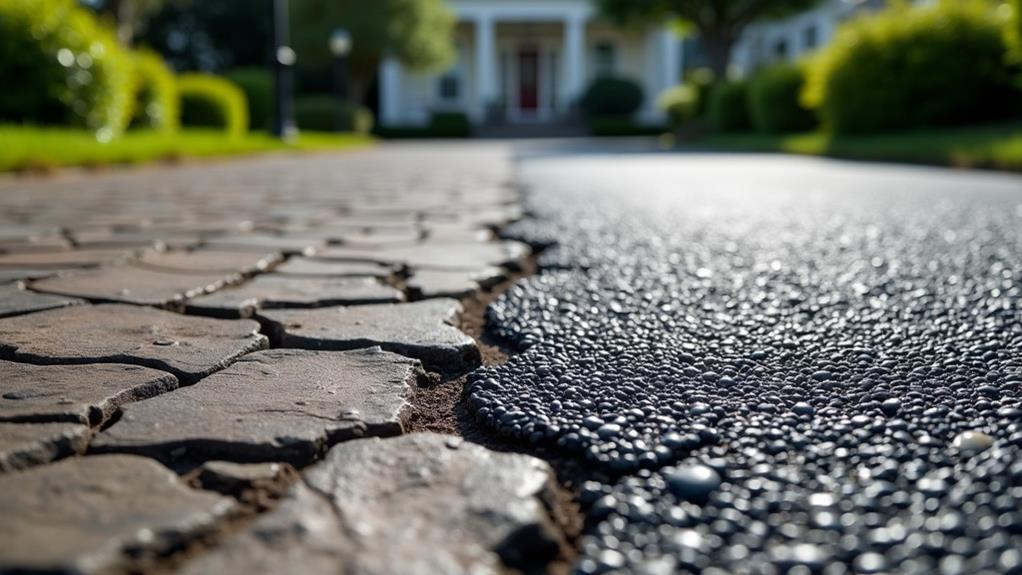
Before deciding whether to apply a second coat of sealer, it’s important to evaluate the current condition of your asphalt. Understanding the state of your pavement plays a significant role in determining the necessary maintenance steps that can prolong its lifespan and enhance its performance.
Firstly, observe the general appearance of your asphalt. Is it uniformly black, or has it faded to a dull gray? A faded color often indicates significant wear and may suggest the need for more thorough sealing.
Here are specific factors to check:
- Surface Texture: Examine the smoothness of the asphalt. Rough, uneven surfaces can imply underlying issues that mightn’t be addressed solely by adding another layer of sealer.
- Presence of Surface Cracks: Small cracks can evolve into larger problems, affecting asphalt lifespan. Assess the depth and width of these cracks to determine if a second coat will be sufficient or if more intensive repairs are required.
- Drainage Quality: Poor drainage can lead to water damage and compromise the asphalt structure. Verify there’s no standing water.
- Age of the Asphalt: Older asphalt might require more frequent sealing. Knowing the installation date helps predict future maintenance needs.
Additionally, it’s vital to take into account temperature fluctuations that can create a cycle of expansion and contraction, leading to further cracking if the asphalt isn’t properly maintained.
Regular maintenance, including sealing, can help mitigate these effects and extend the pavement’s usability.
Benefits of Applying Multiple Coats
Understanding your asphalt’s current condition is fundamental regarding maintenance strategies, including whether to apply multiple coats of sealer. Applying a second coat can offer long-lasting protection by creating a more robust barrier against water, oils, and UV damage. Research indicates that a double layer can extend the life of your sealant by up to 50% compared to a single application.
This approach not only safeguards the structural integrity of your pavement but also enhances its appearance. A uniform, rich black finish is more achievable with multiple layers, providing an aesthetically pleasing look that can boost the overall appeal of your property.
Additionally, the smooth surface resulting from multiple coats facilitates easier cleaning and maintenance, effectively reducing long-term upkeep costs.
Data from various studies underscore the efficiency of using two coats regarding cost-effectiveness. The initial expense may be higher, but the prolongation of the asphalt’s lifecycle decreases the frequency of reapplications.
This means fewer disruptions to your daily operations and long-term savings. Fundamentally, investing in multiple coats of asphalt sealer now can yield significant economic benefits and maintain the enhanced appearance of your pavement for years to come.
How Weather Affects Sealer Application
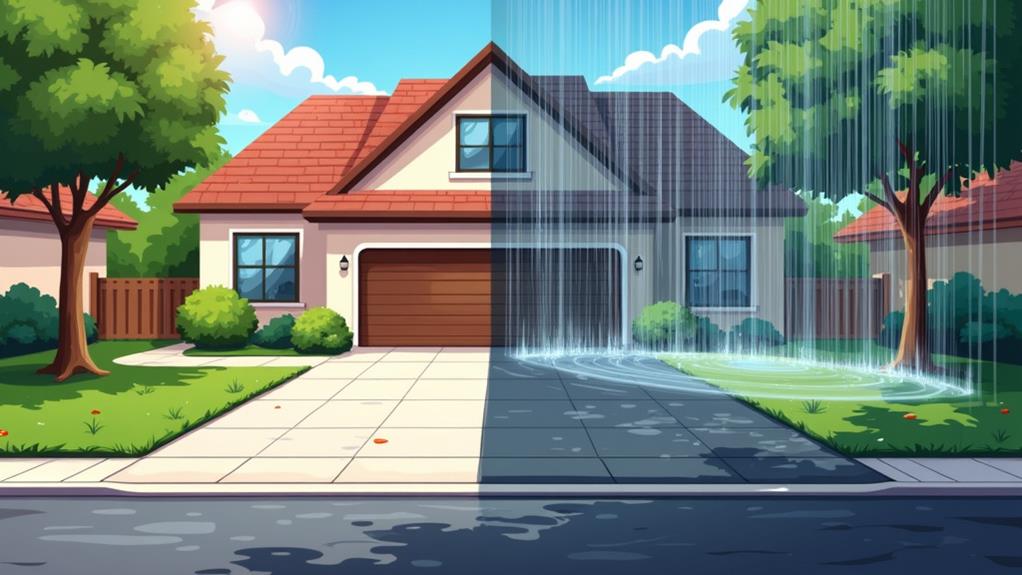
How does weather influence the application of asphalt sealer? The temperature impact and humidity levels play critical roles in both the performance and the curing time of asphalt sealers. You’ll find that specific conditions can greatly alter the effectiveness of the application process.
- Temperature Impact: Ideal temperatures for applying asphalt sealer range from 50°F to 90°F. Below 50°F, the sealer can fail to adhere properly, leading to peeling or flaking. Above 90°F, it can dry too quickly, preventing proper bonding to the asphalt surface.
- Humidity Levels: High humidity can extend the drying time of asphalt sealers. When humidity is above 80%, the moisture in the air prevents the sealer from setting correctly, which can result in a tacky finish that mightn’t fully solidify.
- Dew Point: The closer the temperature is to the dew point, the higher the chance of condensation forming on the asphalt surface, which can interfere with the sealer adhering effectively.
- Sunlight Exposure: Direct sunlight can cause the sealer to dry too rapidly, which compromises its ability to form a uniform coat over the asphalt.
Additionally, frequent temperature fluctuations, a common cause of asphalt damage, can affect the long-term durability of the sealer by causing the underlying asphalt to expand and contract, potentially leading to cracks that undermine the sealer’s performance.
Best Practices for Sealer Application

Considering the significant impact of weather conditions on sealer efficacy, it’s vital to follow best practices for sealer application to achieve ideal results.
You’ll need to select the right sealer type for your specific asphalt condition. Acrylic-based sealers offer flexibility and UV protection, ideal for high-traffic areas, whereas coal tar sealers provide robust protection against oil and gasoline but are subject to environmental restrictions in some regions.
It’s important to understand that sealers not only protect but also enhance the aesthetic appeal of your driveway by restoring its deep black color and shiny finish.
Prior to application, verify that the surface is clean, dry, and free of debris. Apply sealer when the temperature is between 50°F and 90°F, and humidity is low to allow for proper curing.
Use a high-quality brush, squeegee, or sprayer for application; the choice depends on the sealer viscosity and your expertise level. Techniques vary, but a common method involves applying two thin coats rather than one thick coat to promote even coverage and absorption.
Be mindful of the curing times; traffic should be kept off the surface for at least 24 hours.
Regular monitoring after application will help you determine when additional sealer might be necessary, typically every two to four years depending on wear and weather conditions.
More Benefits of a Tarmac Driveway for Your Bingham Home A new tarmac driveway can bring a multitude of benefits Read more
Tarmac Driveway After Care Tips If it is well maintained, tarmac driveways will last many years. These tips will help Read more

Maintaining your tarmac driveway is an important task for any homeowner. Proper drainage can make all the difference between having Read more