
To keep your asphalt from cracking, you need to start with a solid foundation; make certain your subgrade is stable, well-compacted, and adequately drained. Use high-grade asphalt mix tailored for your specific climate and traffic conditions to enhance resilience. Proper installation is key—maintain the correct temperature of asphalt during laying for effective compaction and make certain each layer meets thickness standards. Regular maintenance, including routine inspections and immediate repair of minor cracks using appropriate techniques like hot pour fillers for larger gaps, is essential. Finally, apply a quality sealcoating every two to three years to protect against water, oils, and UV damage. Refining these strategies could extend the life of your asphalt considerably.
Understanding Asphalt Cracking Causes
Asphalt cracking often stems from a variety of sources, each playing a distinct role in the degradation of this paving material. You’ll find that environmental factors and traffic loads are particularly influential in this situation. Understanding these can help you alleviate the issue effectively.
Environmental factors such as temperature fluctuations cause asphalt to expand and contract. This thermal cycling stresses the asphalt, leading to cracks over time. Moisture also plays a vital role; water seeping into the pavement can freeze, expand, and exacerbate the formation of cracks.
Solar radiation further contributes by drying out the asphalt, making it more brittle and susceptible to cracking.
Additionally, improper installation quality can greatly expedite the cracking process. Using low-quality materials or failing to prepare the base properly can leave the pavement vulnerable to various forms of distress, including cracking from environmental and traffic-induced stresses.
On the other hand, traffic loads considerably impact asphalt longevity. The repetitive stress from vehicles, especially heavy trucks, can lead to fatigue cracking.
This type of cracking typically manifests as a series of interconnected cracks forming a pattern reminiscent of an alligator’s skin. It’s essential to evaluate the volume and weight of traffic in the initial pavement design to reduce this type of stress.
Importance of Proper Installation
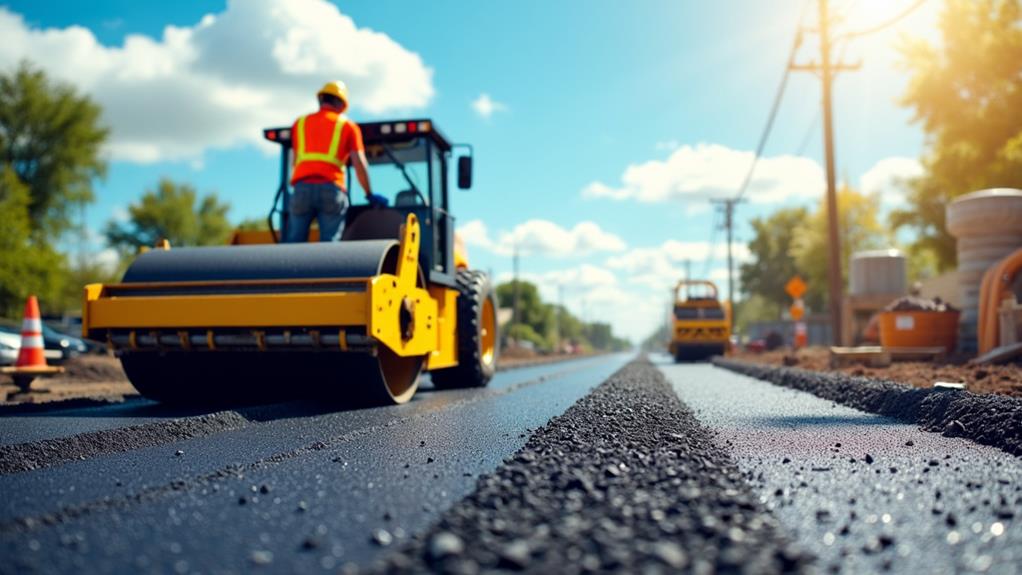
Guaranteeing proper installation is fundamental for enhancing the lifespan and effectiveness of your asphalt pavement. The right installation techniques and material selection are significant factors that determine the durability and performance of asphalt surfaces.
Let’s explore the specifics that can make or break the quality of your asphalt installation:
- Subgrade Preparation: Properly preparing the subgrade is foundational. This means guaranteeing the base is stable, well-compacted, and graded for proper drainage. Poor subgrade preparation can lead to premature failures and cracking.
- Material Quality: You must choose high-grade asphalt mixtures suitable for your specific climate and traffic conditions. Low-quality materials can degrade faster and are more prone to cracking under stress.
- Proper Layering: Each layer of asphalt, from the base to the surface course, needs to be carefully applied. Thickness and compaction must meet specific standards to guarantee structural integrity and load-bearing capacity.
- Temperature Management: During installation, maintaining the asphalt at the correct temperature is essential. Too hot, and the material might degrade; too cool, and it won’t compact properly, leading to weak spots that can evolve into cracks.
Skilled contractors are significant in this process, as they’ve the expertise to guarantee durability and aesthetics by managing the temperature and application techniques effectively.
Regular Maintenance and Inspection
Regular inspection and timely maintenance can greatly extend the lifespan of your asphalt pavement. By establishing a routine of periodic evaluations, you’re actively protecting your investment and guaranteeing pavement longevity.
It’s essential to assess the asphalt’s condition systematically, looking for early signs of distress such as small cracks or potholes. These inspections should become more frequent following extreme weather conditions, which might accelerate pavement deterioration.
To further protect your driveway, avoid sharp turns and stationary wheel turning, as these can cause significant surface damage.
You’ll also need to adapt your maintenance strategy based on seasonal adjustments. For instance, before the onset of winter, it’s advisable to check for any water seepage issues since water expansion from freezing can cause significant cracking.
Similarly, in the summer, applying a sealcoat can protect the asphalt from UV damage and the softening effects of high temperatures.
Furthermore, routine tasks like cleaning debris and dirt off the surface prevent the buildup of materials that can retain moisture and degrade the asphalt.
It’s also beneficial to maintain proper drainage around the pavement area to avoid water accumulation.
Effective Crack Repair Techniques
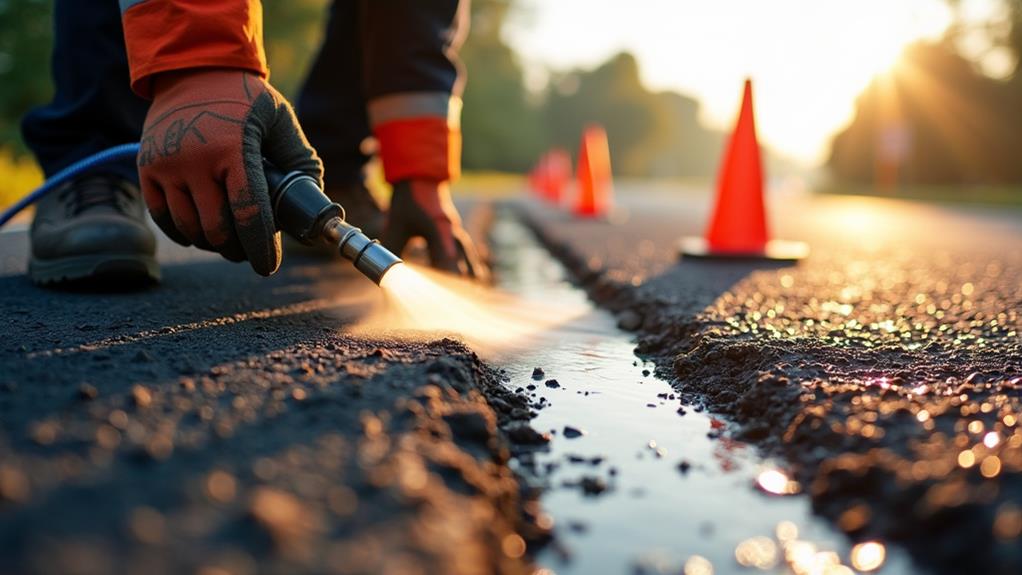
To effectively address asphalt cracking, you must first correctly identify the type of crack, as this determines the appropriate repair technique. Choosing the right method not only extends the pavement’s lifespan but also saves you money by avoiding premature repairs.
Here’s a breakdown of the techniques:
- Hot Pour Crack Fillers: Ideal for filling cracks that are 1/8 inch wide or larger. The hot pour method involves heating the filler material to a liquid state and pouring it into the crack. The material then cools and hardens, forming a strong, flexible seal that resists water penetration and further damage.
- Cold Patch Applications: Best for smaller, more manageable cracks or temporary fixes during colder months. Cold patch materials are applied directly from the container to the crack. No heating is necessary, making this method more user-friendly and less equipment-intensive.
- Routing and Sealing: This technique is suitable for larger cracks. It involves enlarging the crack along its exposed face and filling it with a hot pour sealant. This method allows for deeper penetration and a longer-lasting repair.
- Crack Stabilization: In cases where movement is expected to continue, such as near joints or in areas with heavy traffic, reinforcing the crack with fabric or other stabilizers before applying hot pour or cold patch can prevent further deterioration.
These techniques, when applied correctly, guarantee a durable repair, mitigating future issues and extending the pavement’s functionality.
Preventive Measures and Sealcoating
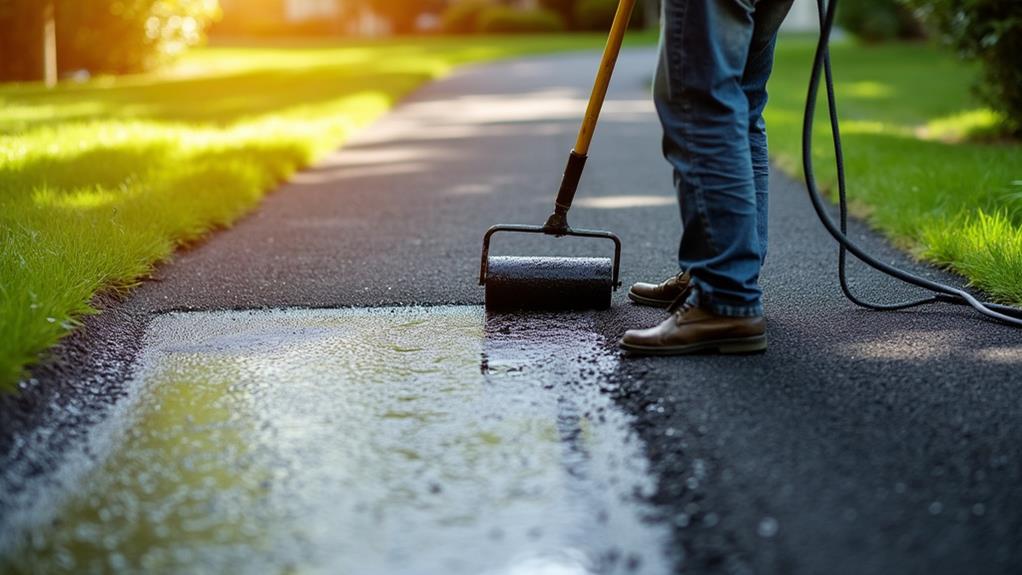
Before asphalt surfaces begin to show signs of wear and cracking, adopting preventive measures and applying sealcoating can greatly extend their lifespan. You’ll find that understanding the various sealant types and mastering application techniques are essential to achieving this.
Sealcoating acts as a barrier against elements that cause deterioration, such as water, oils, and ultraviolet rays. The choice of sealant depends on your specific conditions. Asphalt-based sealants, for instance, offer more flexibility and are better for colder climates, whereas coal tar sealants provide superior resistance to water and chemicals, making them ideal for areas with heavy vehicular traffic.
When it comes to application techniques, precision is key. You must confirm the asphalt surface is clean and dry before application. Applying sealant during ideal weather conditions—typically with temperatures above 50°F and no rain forecasted for 24 hours—guarantees proper adhesion and curing. The sealant should be applied in two thin coats rather than one thick coat to promote even coverage and absorption.
Regularly scheduled sealcoating, every two to three years, enhances the protective benefits and reduces the frequency of costly repairs. By staying proactive with these practices, you’ll greatly prolong the durability and aesthetic appeal of your asphalt surfaces.
More Benefits of a Tarmac Driveway for Your Bingham Home A new tarmac driveway can bring a multitude of benefits Read more
Tarmac Driveway After Care Tips If it is well maintained, tarmac driveways will last many years. These tips will help Read more

Maintaining your tarmac driveway is an important task for any homeowner. Proper drainage can make all the difference between having Read more