
Permeable tarmac, which you’re likely considering for eco-friendly pavement solutions, includes types like porous asphalt, pervious concrete, and plastic grids. Porous asphalt is designed with open-graded aggregates, making it ideal for car parks and low-traffic roads due to its ability to allow water passage. Pervious concrete, characterised by its high porosity and interconnected voids, is perfect for pedestrian paths and residential driveways. Plastic grids provide a unique modular option, filled with gravel or grass, that supports load-bearing while promoting natural water absorption. Each material addresses specific environmental and traffic conditions effectively, laying the groundwork for more informed decisions on their applications and benefits.
Understanding Permeable Tarmac
Permeable tarmac, a significant innovation in sustainable urban planning, facilitates the natural percolation of water through its porous surface, directly combating urban runoff. By allowing water to penetrate the ground beneath, this technology reduces the volume of polluted runoff entering water bodies and mitigates flooding risks.
You’ll find that the environmental impact of permeable tarmac is profoundly positive, particularly in urban areas where traditional, impermeable surfaces contribute to water pollution and elevated temperatures.
The structure of permeable tarmac involves several layers that enhance its efficacy. Below the surface layer, a carefully engineered base composed of aggregate materials supports filtration and drainage. This design guarantees that stormwater is cleansed of pollutants as it seeps through, effectively reducing the burden on local sewage systems and promoting groundwater recharge.
Remarkably, the surface slope and overflow structures are essential for effective drainage, guaranteeing that the system performs efficiently even during heavy rainfall.
Understanding the composition and functionality of these permeable materials is vital. They’re specifically designed to balance durability with permeability. The materials used must withstand traffic loads while maintaining their porous nature to facilitate water infiltration.
Types of Permeable Tarmac
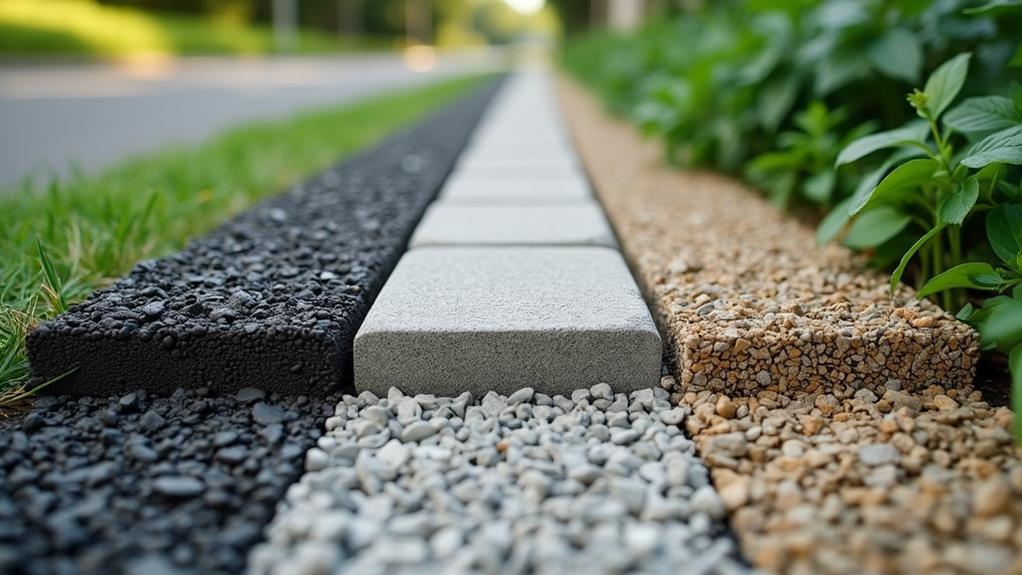
Exploring the various types of permeable tarmac, you’ll find each suited for different environmental and traffic conditions. Mainly, these include porous asphalt, pervious concrete, and plastic grids.
Porous asphalt employs open-graded aggregates bonded with bitumen, allowing water to pass through to sub-layers. This type is particularly effective for car parks and low-traffic roads, where surface water drainage solutions are critical.
Pervious concrete, composed of coarse aggregates, cement, and water, features a high porosity that facilitates rapid water penetration. It’s ideal for pedestrian paths and residential driveways, as it reduces runoff and filters pollutants. The notable absence of fine sand in the mix creates interconnected voids, enhancing permeability.
Plastic grids represent a modular option, often filled with gravel or grass. The structure supports load-bearing while promoting natural water absorption. This solution is frequently employed in overflow parking and emergency access routes, blending functionality with environmental considerations.
Each type of permeable tarmac takes advantage of unique properties of permeable materials to offer tailored drainage solutions. You’ll need to reflect on the specific requirements of your project, including traffic volume and local weather conditions, to select the most appropriate type.
To further enhance the sustainability of these solutions, systems like SuDS are integrated to manage environmental risks effectively.
Benefits of Permeable Surfaces
By implementing permeable surfaces, you gain significant environmental and practical advantages. To begin with, these surfaces are essential in reducing the environmental impact of urban run-off. Traditional impermeable pavements often direct rainwater into storm drains, burdening municipal systems and potentially leading to pollution of local water bodies.
Permeable tarmac, however, allows water to seep through, decreasing run-off, and recharging groundwater supplies. This natural filtration can lessen the presence of pollutants entering water systems. Additionally, the use of porous asphalt supports water conservation and is effective in promoting sustainable land development.
Moreover, you’ll notice a marked reduction in surface water pooling, which lowers the risk of flooding—a particularly significant benefit in areas prone to heavy rainfall. This characteristic not only enhances safety but also extends the lifespan of the pavement by preventing water accumulation and the associated stress.
When it comes to maintenance practices, permeable surfaces offer a distinct advantage. They require less frequent intervention than their impermeable counterparts since they prevent the accumulation of surface debris and water that can lead to damage.
Regular, simple maintenance procedures such as sweeping to keep the surface clear and periodic vacuuming to remove fine particles from the pores, keep these surfaces functional and effective. This ease of upkeep not only saves time but also reduces long-term maintenance costs.
Installation Process Explained

After understanding the numerous benefits of permeable surfaces, it’s important to take into account how they’re installed to guarantee peak performance and longevity. The installation process of permeable tarmac is essential in making certain effective drainage solutions and reducing environmental impact.
Here’s how you can confirm that your permeable tarmac is installed properly:
- Site Preparation: Before laying the tarmac, verify the site is properly graded. This involves removing any debris and vegetation. A well-prepared base is critical for effective water infiltration and load distribution.
- Sub-base Installation: Install a robust sub-base composed of crushed stone. This layer is important as it acts as a reservoir for rainwater, facilitating controlled water runoff and alleviating the burden on local drainage systems.
- Tarmac Laying: Pour and spread the permeable tarmac mixture. It’s essential that the material is evenly distributed to avoid weak spots that could compromise the surface’s integrity and functionality.
- Compaction and Curing: Compact the tarmac to enhance its strength and durability. Allow sufficient time for curing, verifying the surface is ready to handle traffic and extreme weather conditions without degradation.
Ideal Applications for Permeable Tarmac

Consider the diverse environments where permeable tarmac proves most beneficial. Focusing on urban landscapes, you’ll find that residential driveways and commercial parking areas serve as prime examples of ideal use. Here’s why: these surfaces endure frequent vehicular traffic, necessitating robust, durable paving solutions that also reduce water runoff effectively.
For residential driveways, permeable tarmac offers a dual advantage. To begin with, it reduces the risk of water pooling, which can compromise driveway integrity over time. In addition, it enhances groundwater recharge, which is vital in urban settings where natural soil absorption is limited. This type of tarmac supports a sustainable urban drainage system (SUDS), decreasing the load on municipal stormwater systems and reducing flood risks.
In the context of commercial parking lots, the application of permeable tarmac extends beyond just practicality. It’s about compliance and sustainability. Many urban areas now have regulations requiring permeable surfaces to combat urban heat island effects and manage stormwater.
By integrating permeable tarmac, you’re not only adhering to these regulations but also contributing to a more sustainable infrastructure.
Adopting permeable tarmac in these applications isn’t just about following trends—it’s about making a calculated, responsible decision for long-term environmental and infrastructural health.
More Benefits of a Tarmac Driveway for Your Bingham Home A new tarmac driveway can bring a multitude of benefits Read more
Tarmac Driveway After Care Tips If it is well maintained, tarmac driveways will last many years. These tips will help Read more

Maintaining your tarmac driveway is an important task for any homeowner. Proper drainage can make all the difference between having Read more